Search the dictionary Advanced Search
How to use the Ojibwe People's Dictionary

Plums or Nuts: Ojibwe Stories of Anishinaabe Humor
Ojibwe People's Dictionary Speaker Amikoban and former researcher Migizi publish book and audio recordings
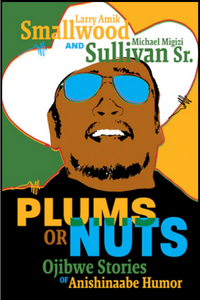 We are pleased to provide access to the audio recordings for Plums Or Nuts: Ojibwe Stories of Anishinaabe Humor. The recordings contained in this collection come from the late Larry Amik Smallwood, amd were recorded and transcribed by Michael Migizi Sullivan Sr., who worked as a researcher with the Ojibwe People's Dictionary from 2011 to 2013. Their book, Plums or Nuts: Ojibwe Stories of Anishinaabe Humor, is available from the Minnesota Historical Society Press.
Edited and revised versions of these recordings are published in Plums or Nuts: Ojibwe Stories of Anishinaabe Humor. These 25 recordings correspond to the stories in the book, and are the raw, original audio. The book includes textual notes where the published transcriptions deviate from the original recordings. The following recordings are copyrighted 2023, and made available here under a 
Creative Commons Attribution-NonCommercial-NoDerivatives 4.0 International License.
- Gii-nitaawigiyaan
Listen
- Aaniin Bagonez
Listen
- Akakojiish
Listen
- Joonya-ish
Listen
- Gizhaagamide
Listen
- Gookooko'oo
Listen
- Biindaakwaan
Listen
- Aano-gii-bakiteganaamid
Listen
- Gaazhagenzhish
Listen
- Noodinoban
Listen
- Gaa-shizhookang Akiwenzii
Listen
- Ishpidoondinechigewag
Listen
- Manoomin Naa Ogookomisan
Listen
- Baa-gaanjwebinamaan Ninibaagan
Listen
- Megwayaak
Listen
- Wiidookawishin
Listen
- Debibizhiweyaang
Listen
- Chi-maminikweyaang
Listen
- Waabooyaanish
Listen
- Bishaga'aakweyaang Chi-Obizaan
Listen
- Aamoog
Listen
- Gii-paashkijiisijigeyaan
Listen
- Ge-dasoozogwen
Listen
- Moozoomoo
Listen
- Bagesaanag Maagizhaa Bagaanag
Listen
 Michael Migizi Sullivan Sr. is a lifelong student of the Ojibwe language, father, husband, ceremonial drum keeper of the Ojibwe, powwow emcee, up-and-coming storyteller, and teacher of the Ojibwe language. Sullivan earned his doctorate in linguistics at the University of Minnesota-Twin Cities, working under the tutelage of Dr. John D. Nichols as his academic advisor and the late Larry Amik Smallwood as his main language consultant. Sullivan previously served as the Community Language Curator for the Ojibwe People’s Dictionary and is currently the Faculty Director of Native American Studies at the Lac Courte Oreilles Ojibwe University on his home reservation of Odaawaa-zaaga’igan, where he teaches the intricacies of the Ojibwe language that he learned from Amik.
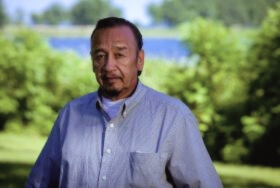 Larry Amikoban Smallwood worked as a language instructor for the Minneapolis Public Schools, Nay Ah Shing School, University of Minnesota - Duluth, and Leech Lake Tribal College. In addition to working with the Ojibwe People's Dictionary as one of Ojibwe Elders, he also served as the director of language and culture for the Mille Lacs Band of Ojibwe. Amikoban travelled on in 2017.
Welcome to the Ojibwe People's Dictionary
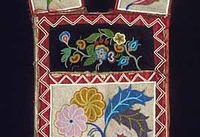
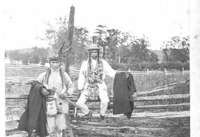
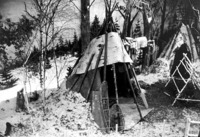
The Ojibwe People's Dictionary is a searchable, talking Ojibwe-English dictionary that features the voices of Ojibwe speakers. It is also a gateway into the Ojibwe collections at the Minnesota Historical Society. Along with detailed Ojibwe language entries and voices, you will find beautiful cultural items, photographs, and excerpts from relevant historical documents.
The Ojibwe People's Dictionary has thousands of entries and audio, with more coming online each week. It is our goal to make The Ojibwe People's Dictionary a continually expanding resource for Ojibwe language and culture.
Why we need the Ojibwe People's Dictionary
Ojibwe is the heritage language of more than 200,000 Ojibwe people who reside in the United States and Canada. Ojibwe Country primarily extends from Quebec, across Ontario and Manitoba to Saskatchewan in Canada, and from Michigan, Wisconsin, Minnesota and North Dakota in the United States.
Ojibwe is not a single standardized language, but a chain of linked local varieties, grouped into nearly a dozen dialects. Each dialect (and within dialects, each local variety) differs in details of pronunciation, vocabulary and grammar from the others, with differences between non-adjacent dialects often being great enough to impede understanding between their speakers.
Speakers of Ojibwe consider their language to be precise, descriptive, and visual, and feel that it is among the greatest treasures of their cultural heritage.
Ojibwe is an endangered language. Indigenous languages throughout the world are in decline, and have been since Europeans first colonized the Americas. Beginning in 1879, the United States established off-reservation federal boarding schools to re-educate Indian children and youth in the English language and American life-ways. Boarding schools, urban life, popular culture, and even participation in public school education all demanded that we speak English. The Ojibwe language has historically been repressed by policymakers and educators in the US and Canada, though there are many, complex reasons why fewer people today speak Ojibwe.
Scholars and linguists tell us that language diversity is as important to the world and our systems of knowledge as biological diversity. Ojibwe people understand that fluent speakers of the language have a wisdom that represents an accumulated knowledge of many generations. The Ojibwe language can explain why we must respect the earth and take responsibility for caring for the land, water, and its resources. It is the antidote to global climate change, environmental destruction, and unhealthy lifestyles. The Ojibwe language is where we turn for philosophy, history, science, medicines, stories, and spirituality. It is our university and the key to our cultural survival.
The purpose of the Ojibwe People’s Dictionary is to support language education and encourage new speakers among the present generation.
Revitalizing Our Language
"Revitalizing our language is foremost in my mind," says Eugene Stillday of Ponemah, Minnesota, who remembers a time when everyone spoke Ojibwe in his community. Speakers of the Ojibwe language have great insight into the historical reasons for the decline of indigenous languages, because their generation experienced it first-hand. For the most part, they have sad memories of their experiences with school and teachers. Resiliently optimistic, they remember the past but look to the future. They each share a passionate commitment to the Ojibwe language and culture, to education, and the importance of passing on the language to a new generation. Listen to the Ojibwe speakers who contributed to the Ojibwe People’s Dictionary, and their reasons for getting involved in the project.